
.jpg)
A couple of week’s ago, LFN Co-Director Brontie Ansell and researcher Alex May took part in Love Our Ouse’s Rights of River Summit in Lewes, a town in Sussex in the south of England. It was a great event which combined presentations on a range of topics with workshops on different aspects of developing a River Charter.
The Love Our Ouse campaign is made up of local residents, councillors, nature lovers and professionals. Their aim is for the River Ouse to better benefit all life, nonhuman and human. In February 2023, Lewes District Council passed a motion which commits to exploring a Rights of Rivers approach and producing a Declaration of the Rights of the River Ouse which the Council could endorse. This does not yet have any policy or legal effect, but signals a strong intention to move in the right direction. The Summit was held to bring together key parties, including the Council, environmentalists, the water utility company, legal experts and residents, to make progress on developing the River Ouse Charter. This makes Lewes one of the few places in the country where the Council are on the same side as the campaigners!
The Summit included presentations from an ecologist, a lawyer, and a philosopher about Rights of Nature and other protection activities, as well as a panel Q&A session. It also included a fascinating talk on the history of the river, some of the other beings who live in and around the river, and the challenges being faced. The richness and complexity of human-river interaction was striking: humans have been intervening with the course of the river for over six hundred years! Being near the sea, the area that is now Lewes used to be marshland which would flood, and during industrial times the flow was used as a source of energy. The shift from an organic ecosystem to a human-controlled one was obvious, and a reminder that taking the rights of rivers seriously challenges us to consider significant social change – just as facing up to ecological crises does, which Rights of Nature helps us to respond to.
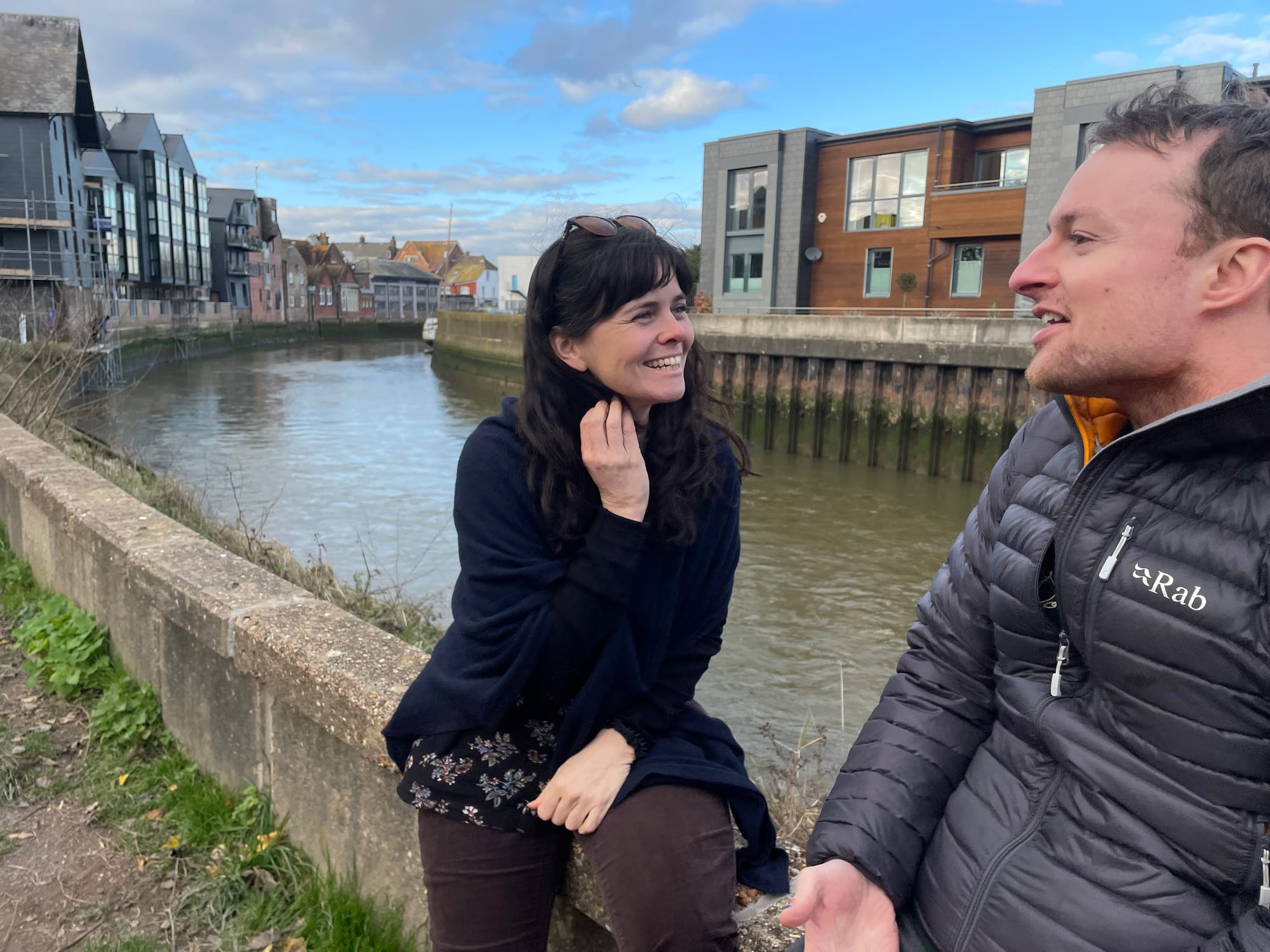
Workshops in the afternoon took place in a pavilion by the river – which was more practical than holding the workshop on boats, I guess! On the way was a tour of a nature reserve on former railway land – which was saved from being redeveloped for a built human environment. This included a stream that only flows over winter, the Winterbourne. The workshops sought to collectively develop the River Ouse Charter with the range of people and stakeholders attending. Discussion points included: who should speak for the river; how to engage people who aren’t currently involved; what legal effects there might be; and what implementation might look like.
Developing the Charter is not simple, due to the myriad of possibilities. One key choice is whether the Charter should primarily be about embedding a Rights of Rivers approach within the local Council, or whether it should be about catalysing wider change. Declaring rights is one thing, but what they mean for various actors is quite another – and perhaps different responsibilities should be recognised for the Council, for landowners, for businesses and the local community. As it is being developed either by or with the Council, that significantly affects the shape the Charter takes. An idea that was raised a few times was the recognition that ‘the river’ should be understood as ecological interrelation, not just as a flow, and those who speak ‘for the river’ could represent different beings in the ecosystem – who (almost) all benefit from a healthy river but have different preferences for river flow and habitats. Some sort of interspecies council might be needed!
All in all it was a wonderful day. The mixed format worked very well, and we met a couple of people for the first time in person who we had been speaking to digitally this year. We are excited to see the further development of the Charter and how this can inspire initiatives around the country!
.svg)
Share


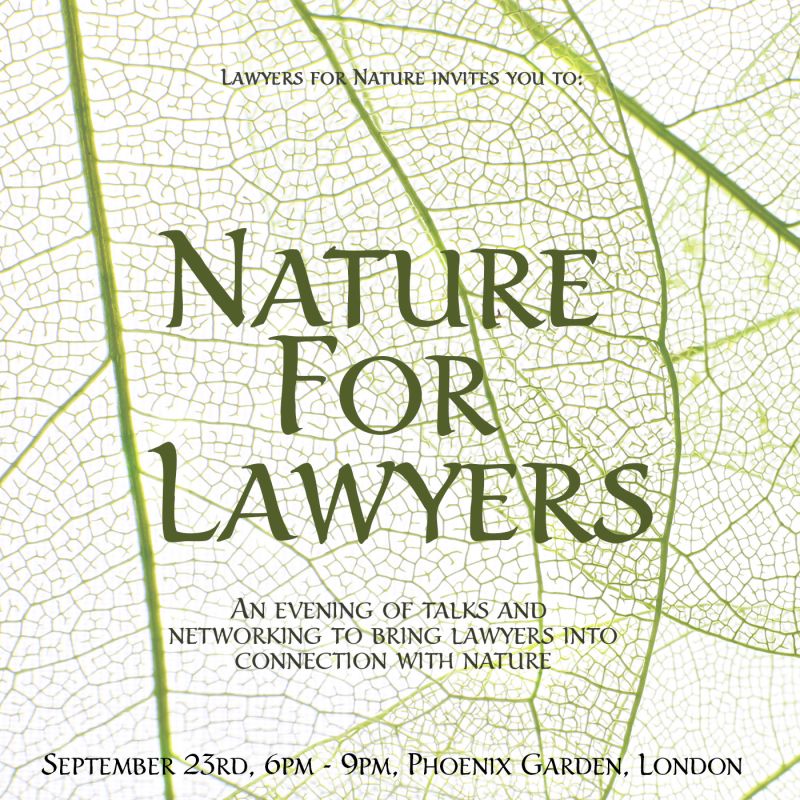
We are excited to update you about our event on Monday at the Phoenix Garden next week on Monday 23rd September. We have planned an evening of talks and discussion to connect nature, law and practice for us all. There will also be some delicious nourishing vegan food. There are still some tickets available so if you’d like to join us, we’d love to have you. To get tickets, click here.
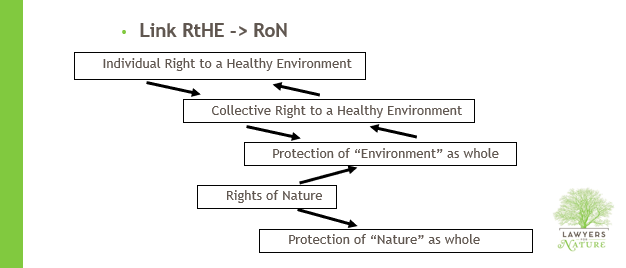
Last month, we submitted a response to the Scottish Government’s consultation on ‘A Human Rights Bill for Scotland' to emphasise the importance of taking an ecological approach to the Right to a Healthy Environment, and to highlight the role that Rights of Nature can have in realising this.
