
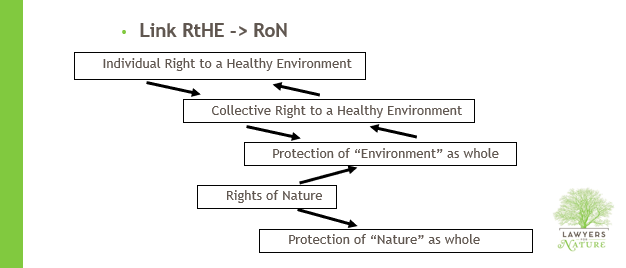
Last month, we submitted a response to the Scottish Government’s consultation on ‘A Human Rights Bill for Scotland' to emphasise the importance of taking an ecological approach to the Right to a Healthy Environment, and to highlight the role that Rights of Nature can have in realising this. In short: if elements of nature are not directly protected, the healthy environment for humans will continue to be devastated.
The Scottish Government’s proposals seek to incorporate human rights norms from international human rights treaties into Scottish law – and this includes establishing the (human) Right to a Healthy Environment (RtHE) as a stand-alone right in Scottish law. This is an exciting development, and a necessary one, because while this right has been recognised internationally, it is not part of the existing European Convention on Human Rights or UK Human Rights Act.
The traditional approach to human rights is based on a false conception of humans as atomised individuals abstracted from social or ecological context. The recognition of the RtHE moves us towards a legal notion of humans as existing in an ecological world, and that if it is not healthy, we face a vast range of problems. Yet the individualistic liberal approach to human rights, even as it expands to recognise the need for a healthy environment, fails to recognise the relational socio-ecological context which individuals live within.
Establishing the Right to a Healthy Environment is a step forward. But in our submission, we argued that if an ecological approach to the RtHE is not taken, it will be unlikely to achieve the goal of securing a healthy environment into the future. We recommended that the Scottish Government draw from global best practice and adopt the collective and ecological approach to the RtHE which has been developed in Latin America.
Our submission included:
There is little difference between securing a healthy environment for humans and securing ecological integrity for a healthy natural world. An approach which does not protect the natural world directly, and only has the strand of the individual human right to a healthy environment, is unlikely to achieve this protection into the future. This was the view taken by the Irish Citizens’ Assembly on Biodiversity Loss, who recommended the inclusion of both the human right to a healthy environment and Rights of Nature in the Irish Constitution (more here).
Thanks to LFN volunteer Hannah Taylor for research assistance in relation to our submission.
.svg)
Share


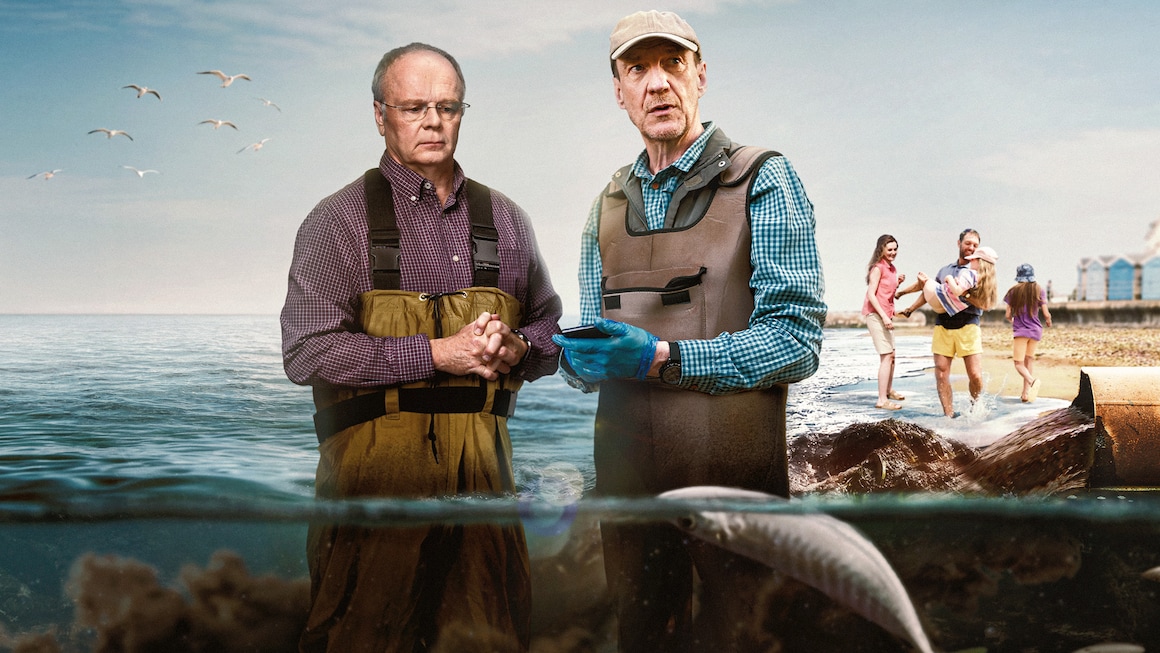
This week, Dirty Business aired on Channel 4. It tells a story many of us already know deep in our bones: Britain’s rivers are being illegally polluted on an industrial scale, and ordinary people have had to step in where government and institutions have failed.

